
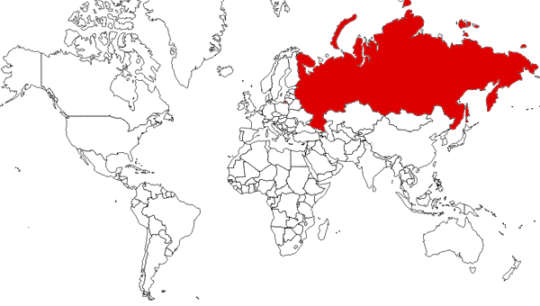
With a population of over one hundred and forty-four million citizens and considered the largest country in the world by surface area, Russia’s economy stands within the top ten worldwide. Exports from Russia are predominantly in the field of Oil, natural Gas, metals and Timber, although fish supply has been a rising trade in the past few years.
The Introduction
Organising a meeting in Russia requires some advanced notice with confirmation of an appointment a few days before the date. It is better to converse by telephone rather than email or letter to ensure that all times are correct. Punctuality is important in Russian business culture and it is considered polite to be on time for meetings. Hosts are normally on schedule to meet their guests promptly, although it is known on occasion for Russian businessmen to keep visitors waiting as a small inference to their senior status.
Having some knowledge of those attending is advantageous since the visiting delegation can prepare themselves in advance to match the management structure of their hosts. This balance could be useful during the negotiation process. Dress code is always formal with suits, appropriate length skirts and smart shoes being the best way forward. When waiting for counterparts to arrive, it is considered impolite to have hands in pockets. The smartness of attire is integral to a great first impression.
Business cards are a useful addition and in Russia and they should be double sided in both the guest’s language and in Russian. Additional information such as degrees or professional accreditation are impressive and should also be printed. When greeting the host, it is important that the handshake is performed within the room and away from the door. It is considered unlucky to perform this close to any entrance. Titles such and ‘Mr’ and ‘Mrs’ should be used to consolidate the professional nature of the talks.
The Meeting
One of the first interesting observations in Russia is the hierarchal structure of organisations. Those in authority are clearly presented as company leaders through larger offices, opulent surroundings and other observational privileges. The most senior of all managers is often viewed by junior staff as powerful and distant to those who do not share the same status.
The duration of the talks can vary and is dependent on all topics being discussed and brought to a mutual conclusion. Patience is important when negotiating any agreement since it shows a disciplined approach to work. Processes can be slow and it is advisable to plan ahead for the day in case any talks overrun. The agenda is not a formal process and the host will determine how long a subject will be debated. It is best to avoid hard selling techniques since it may cause confrontation or breakdown of the consultation process between the host and their managers.
During the meeting, it is expected that the guest delivers a clear message about why their company is the best option for providing business. Whilst Russian companies are more comfortable in conducting trade with those they know, they will also work with others who demonstrate a strong ability to perform well. The host will want to see how a professional working relationship can enhance the partnership, but it the integral part of ongoing cooperation is results.
The host may on occasion use the opportunity of a guest audience to credit and reward his employees for good working practice. It is uncommon however to see this in meetings with outside parties but it has been known to happen.
Decisions are always made at the highest level and once the other managers have advised the boss, the choice is confirmed. The process can take a lot of time since some executives may take issue on aspects that need reviewing, however the decision is exclusively with the most senior person.
Sometimes in the negotiation process, there may be a frank exchange of views however it always best to pause for a break and express a reconsideration of position on your return. It is relatively common for Russian staff to leave the discussion and consult each other outside on decision processes being made exclusively by the host.
Having a good contact person within the organisation is a massive bonus since the relationship dynamic develops over time. It is notable though that if this person leaves the company, another equally strong rapport with another employee is required.
A working dinner
Russian hospitality is renowned for its generosity and meetings on occasion are combined with food and drink. When meetings are at length, they can feature lunch and an opportunity to socialise with the host delegation. It is a respectable gesture to learn a few words in the Russian Language in order to demonstrate desire to integrate into Russian society. When eating at a restaurant, it is polite to wait for the host to commence the meal or initiate an action first.
Russian Business is a patient and tactical affair. There should be no rush to finalise deals and anyone visiting will find that good networking can really pay off. Despite Russia’s former political ideologies, business is conducted within a similar style to the West, whilst shared values such as punctuality and dress code are equally important. Be prepared for some passionate debating in the negotiating stages and always request a pause in proceedings to reconsider ideas. Local knowledge and some language learning will go a long way to impressing a Russian host, but performance and delivery results count equally well for a strong working relationship.