
Non-Verbal Language – Gestures and Signs
Conducting business worldwide can be a complex mix of cultural understanding, language barriers and attention to personal detail. Sometimes the very best of linguists can become unstuck in an environment where they’ve understood the people and customs.
The mistakes stem from a lack of in-depth cultural knowledge alongside a belief that what is harmless at home must surely be harmless abroad. According to Albert Mehrabian’s research, Body language and gestures make up fifty percent of overall communication with the tone of voice being another thirty-eight percent. With only seven percent focused on the words, getting all three correct is the key to successfully negotiating business.
Inglorious Basterds
A classic example, in 2009, Quentin Tarantino introduced a film called ‘Inglorious 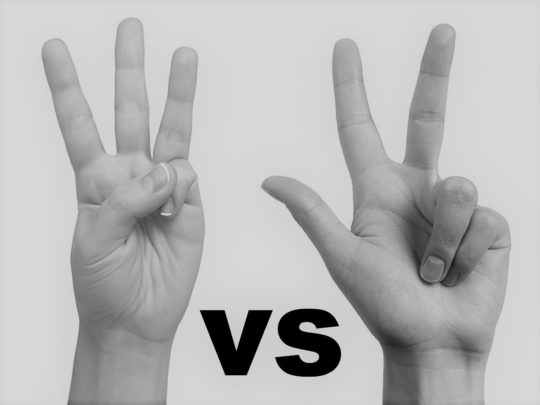 Basterds’. Within the movie, there was a scene where a British spy wearing a German uniform was being questioned about his accent since the native speaker could not place it. Having bluffed his way through the intense questioning, he went and ordered three drinks. Consolidating this command with a hand gesture, his cover was blown by the way he held up his fingers. This almost negligible method of communication led to fatal consequences because he had not understood local customs where hand gestures, amongst other signs were different.
Thankfully such extreme outcomes are not prevalent today, however it should be noted that how we move our hands and the position in which we rest our feet can be seen differently by others.
Hands
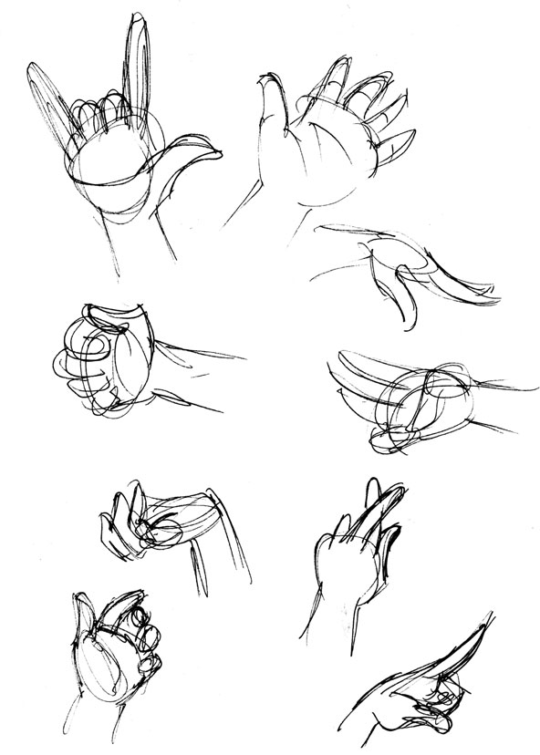
The Unspoken Languages of the World
It is often observed in Western culture that meetings will begin with a handshake before seats are taken. In Asia, the handshake may be a little too close for comfort and a bow is sometimes preferred. In the Middle East, a handshake may also suggest that serious business deals are about to start.
Pointing towards a person with an outstretched finger may appear quite an innocent method of singling someone out. In China, this can be offensive whilst in Italy it may suggest something is wrong with that person. Using this gesture in the Philippines to beckon someone over is a massive faux pas since it is only used for dogs.
If language skills are lacking, an affirmation of agreement is normally performed by a ‘thumbs up’ motion. This is widely accepted in the UK, Canada and Russia as positive. It is considered rude however in South America, the Gulf states and parts of Africa as it bears the same connotation to the offensive middle finger sign commonly used in the West. In a similar fashion, the ‘two-finger salute’ most usually seen in the UK and Ireland shows disrespect, yet the same form was considered a peace symbol in the United States.
Sometimes the ‘OK’ sign is used to replace the equally positive thumbs up motion used in the US and UK. By creating a circle with the thumb and index finger, it denotes happiness with the situation. There are more negative inferences in Greece, Spain and Brazil, where it is considered a crude part of the anatomy.
Visiting a music festival and displaying your fingers to show a horn is something quite acceptable in the United States when rock music is enjoyable. In parts of South America and Europe, it can be misunderstood as a means to identify adulterers and also be interpreted as devil worshipping.
For those relying on good fortune when entering a foreign boardroom, caution is advised when crossing fingers for luck. In Vietnam, the symbol is too similar to the female form and is considered very inappropriate to display.
Feet
In China, it is ill mannered for feet to be directly facing someone. Crossing legs should be done so at an angle where this is avoided. Whilst it bears almost no meaning in the West, countries such as Malaysia, Thailand and Turkey believe that since feet touch the dirty floor, the soles should not be directly exposed to anyone. Should a meeting arise in the Arabian Peninsula and a suited businessman inadvertently shows the base of his shoes whilst crossing his legs, this is considered offensive. In
Japan, crossing legs is considered impolite whilst in parts of the Middle East and South Africa, the sole of the feet may indicate bad luck or ill feeling.
In the West, etiquette also applies to placing feet on a desk or public transport seats. It is equally observed as a negative, disrespectful action.
Head
The act of accepting or refusing a question by use of the head is a subtle nonverbal indicator. The majority of people confirm a nod for yes and a shake for no. This is reversed in countries such as Bulgaria and Greece.
Eyes
The Finnish and the Japanese are less inclined to engage in eye contact until a strong conversation has developed. In Spain, Greece and the Middle East, this is quite the opposite with eye contact being a fundamental part of any engagement.
Nose
The nose can have some very different meanings. Tapping the nose in the UK can indicate that something should remain secret, whereas in Italy this gesture is an alert to others. In the West, the act of blowing into a handkerchief is socially acceptable but is heavily frowned upon by the Japanese.
Arms
Gesticulating wildly with the arms is commonplace in Italy and the United States, but some European countries can find it insincere and overbearing. In Japan, this over dramatisation is considered impolite.
Setting the right impression can be achieved through enhanced local knowledge and regional body language gestures. If a foreign boardroom is willing to engage in their host’s native tongue, it is a chance to thank them and respond with correct non-verbal communication.